To Know A Place Like Mississippi
I've spent a great deal of time this week thinking about what Mississippi's election might tell us about the country. The longer I've stared at the county returns, the more I've found myself thinking about the people I knew there and one person in particular.
My friend, Jeremy Nabors, who died in April.
Jeremy grew up in Okolona, Mississippi, a small town in Chickasaw County. More than forty percent of residents there live below the poverty line. Around the time he attended Okolona High School, nearly forty-five percent of students dropped out before graduating. From there, he made his way to Ole Miss, where we met. We were housemates for a time, became close friends and eventually became family.
He was brilliant, wickedly funny, bookish and possessed of an inexhaustible appetite for mischief. He had a bumper sticker that read, “I'd rather be reading Airships.” That referred to a collection of short stories by Mississippi writer Barry Hannah that offers a strange, often brutal look at Southern masculinity, violence and the absurdities of being human. Jeremy once told me that book had changed the trajectory of his life.
He was Black, had grown up poor and was raised by his mother and grandmother in a sprawling extended family. He joined the Army, but was medically discharged when he was diagnosed with testicular cancer. He was also a registered Libertarian in a family of Democrats, although I suspect he enjoyed aggravating people more than he cared about politics. He loved the VA, too, and spoke about his medical care with a gratitude that surprised anyone accustomed to hearing veterans complain about the system.
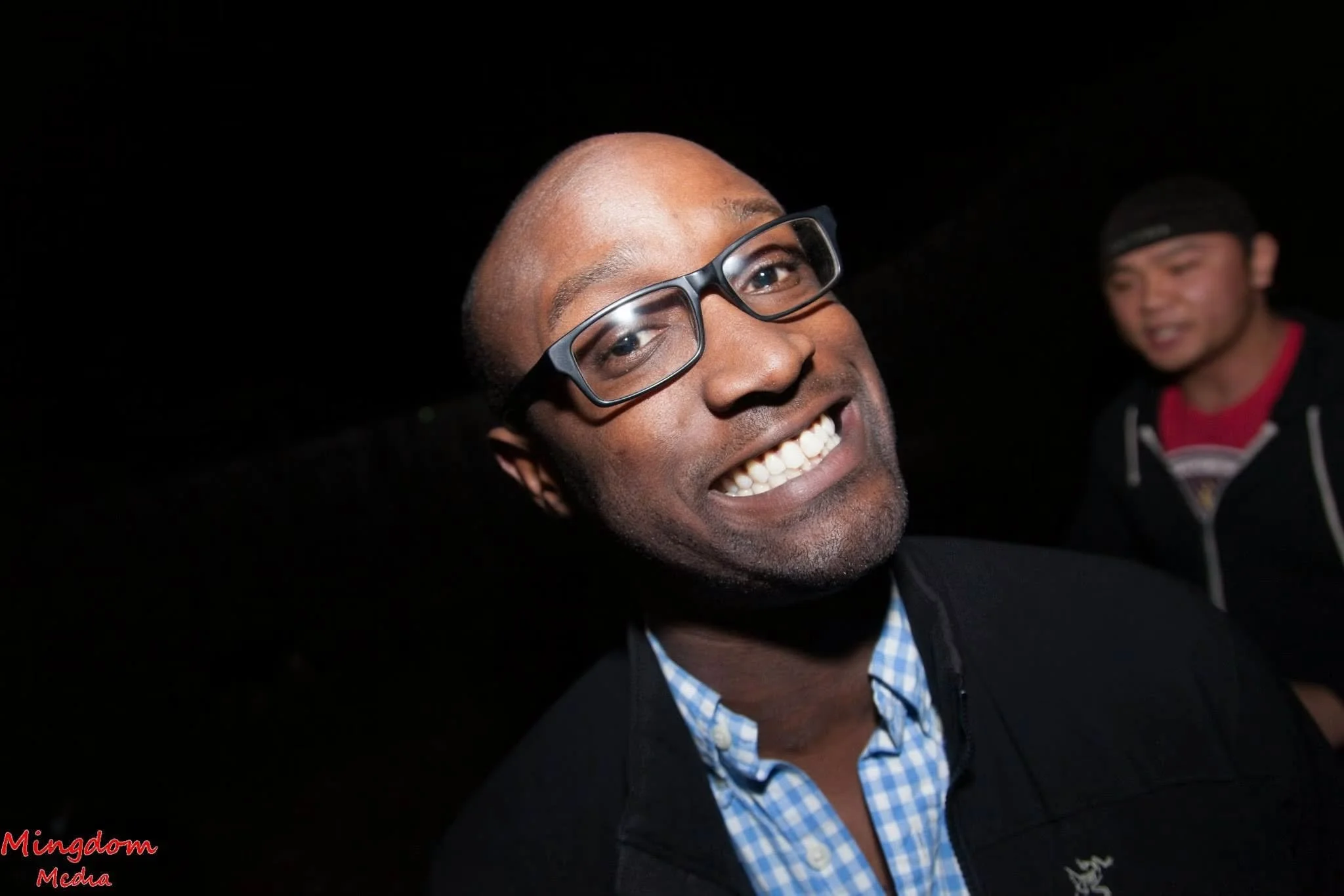
Jeremy Nabors 1988-2026
You never knew what would come out of that man's mouth. He was always walking a line between getting himself into trouble and making something of himself.
In May 2013, in a Faulknerian twist of fate, Jeremy lost his mother and grandmother within days of each other, over Mother's Day weekend.
Their joint funeral was held on June 1 in the gymnasium at Okolona High School, where Jeremy and his mother had both been students. It was hot. Miserably, suffocatingly Mississippi hot. There was no air conditioning and hundreds of people came to mourn.
His grandmother's obituary listed eleven children, thirty-six grandchildren, thirty-nine great-grandchildren, and a great-great-grandchild. The family and the town filled the gym and seemed to spill out beyond it.
I remember sitting there for hours, sweating through my dress, surrounded by people who had known these women their entire lives. Ladies in white gloves slipped out to the cafeteria, breaking down boxes and returning with scraps of cardboard that served as fans. That worked until the makeshift fans grew damp and limp in our hands. I was one of only a handful of white faces in the room. I remember the weight of the grief and the extraordinary number of people who had come to share it.
Afterward, my own mother became something of a mother to Jeremy. She welcomed him into our family, included him in holidays and loved him through the years when his health began to deteriorate.
Jeremy was a riot. I could always count on him to go along with an adventure, or whatever absurd idea one of us had dreamed up. The first time he came to Virginia for Thanksgiving, the fall after that funeral, he announced that he wanted to make turkey tails as his contribution to dinner. We spent an entire day driving around Virginia Beach, going from grocery stores to butcher shops to Asian markets, trying to find a place that might sell us a turkey tail. Time and time again we were greeted with strange looks, head shakes; no one had heard of a turkey tail, and the longer it went on, the giddier we got.
At his funeral this spring, I mentioned the story to one of his aunts, hoping to get the recipe to make this Thanksgiving in his honor. She looked at me like all those grocers and butchers had years ago. She didn't seem to have the faintest idea what I was talking about. I've wondered whether Jeremy invented the whole thing just to see how far I'd go along with it. That would have been very much like him.
After his cancer diagnosis, his health never fully recovered and over the years it grew steadily worse. There was a sarcoidosis diagnosis, strokes and a bewildering succession of medical appointments and decisions. After the strokes, he struggled to speak and type and the distance between us made even the simplest phone conversations difficult.
In some ways, I lost him twice.
He'd settled in New Orleans and loved it there. I tried to convince him to move to Virginia, to come stay with me, where I could help him navigate the doctors and appointments and all the things that had become so difficult. But there was no convincing him to come north.
The women in Okolona loved him, too. They cared for him through years of illness, often without the resources or medical knowledge that might have made things easier. His caregivers did not always understand the medical system and I suspect his care was sometimes worse for it.
But they knew how to love him and he was not worse for that.
I loved him, too, and I kick myself now for not doing more. I didn't push harder because I thought we had time. I thought he'd get better.
I thought we'd have more Thanksgivings.
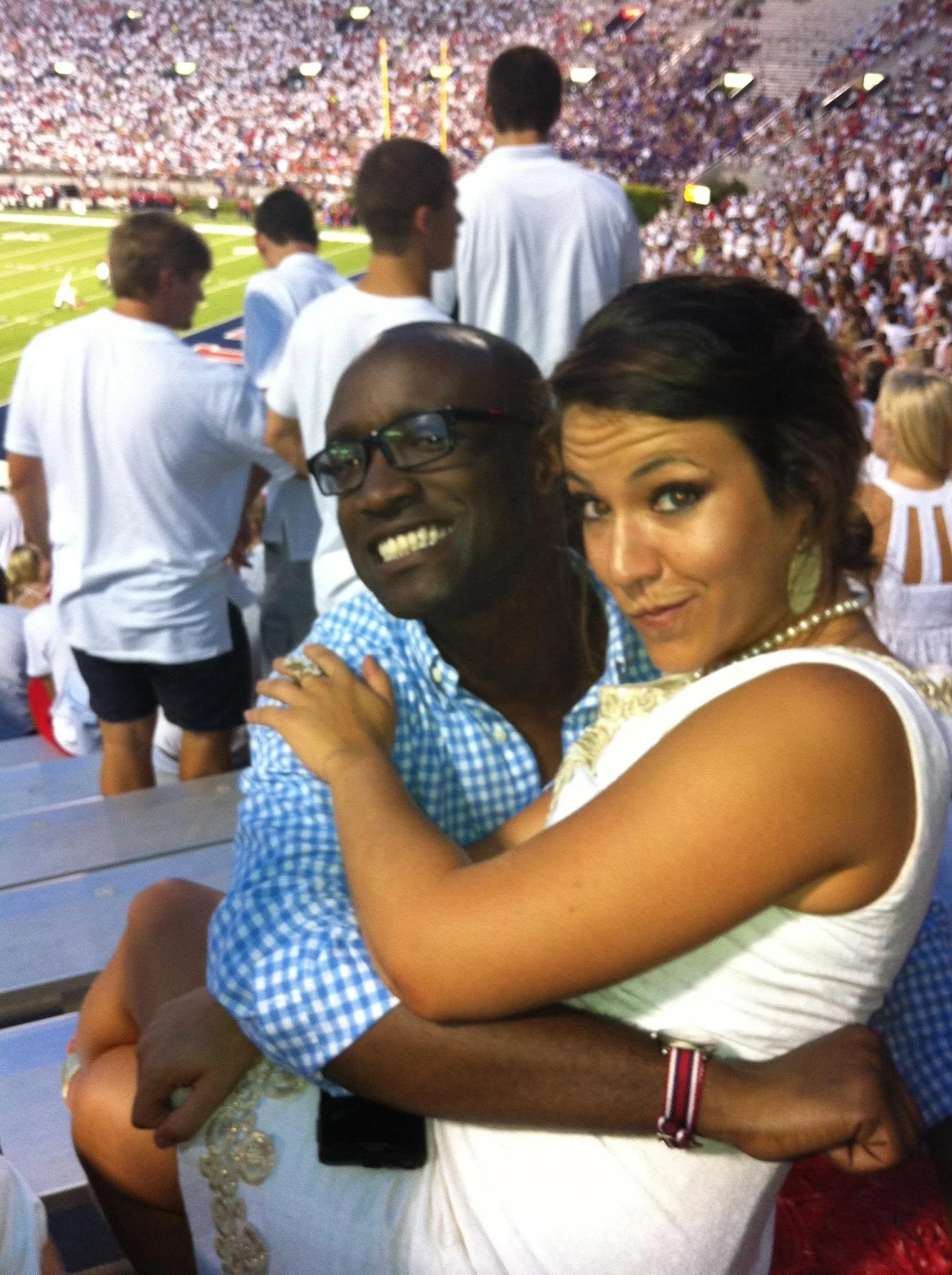
Jeremy and me
Instead, my children will grow up without their Uncle Jeremy. He won't be around to tease them, spoil them, tell them inappropriate stories about our college years, or recruit them into elaborate pranks against me. I'll never share another meal with him, hear his laugh, or see that enormous, million-watt smile.
My mother and I drove down from Virginia for his funeral in April. I hadn't been back to Okolona since the last funeral.
Mississippi has a way of bringing you back to haunted and hallowed ground. Thirteen years later, pulling into the chapel parking lot beside the cemetery where we'd buried Jeremy's mother and grandmother, I found myself in a place I never thought I'd have reason to return to.
My mother was there. So were friends I'd known in Oxford, people who had stood beside me at that first funeral. We were in our thirties now, old enough to have children and complicated lives of our own and there we were again, gathering to say goodbye to Jeremy.
His cousins sang and played music. The funeral was smaller this time, but no less full of love. We listened to stories about him, some touching, some ridiculous. Jeremy would have enjoyed the ridiculous ones.
Afterward, everyone drove out into the country for the repast.
I don't remember much about the drive, except that we seemed to be heading farther and farther into the fields. Eventually, down a long country road, we arrived at a squat little building sitting alone in the rural Chickasaw County landscape.
The Egypt Voting Center.
A place that operates as a storm shelter, a gathering place and a polling station.
Jeremy’s family arrived with heaping metal trays of homemade food for a meal that I will remember for the rest of my life.
Fried chicken, grilled chicken, barbecue, corn, collard greens, macaroni and cheese, cornbread. Everything had been cooked by aunts, cousins, neighbors, people who had known Jeremy since he was a boy.
We ate and talked and laughed. His cousins and childhood friends passed flasks around. People told stories, interrupted one another, remembered things differently and laughed some more. At one point, a cousin approached the table where several of us from college were sitting, again the lone white faces in the crowd, and asked, “Mind if I crash the HOA meeting?”
I have eaten in wonderful restaurants. I don't know that I've ever enjoyed a meal more.
I sat there with my mother and my old friends, among Jeremy's family, thinking about how much life had happened since we were all young together in Oxford. How many people we had loved, how many we had lost, how differently our lives had turned out.
The food was wonderful. The company was better.
On Tuesday, while the rest of the country watched election returns, I found myself thinking about that little building in the middle of the fields.
Those four walls have surely held more than their share of human feeling. The terrible grief of burying someone, the relief of finding shelter from a storm, the laughter that comes when old friends gather around a table. People brought their children there, mourned their parents, fed their neighbors and carried on through whatever life handed them.
On Election Day, they return to that same little room, with all their hopes and disappointments, take a ballot and have their say.
I wondered who was voting there. Whether some of the same people who had fed us after Jeremy's funeral were working the polls, or stopping by on their way home. Whether the room still smelled faintly of fried chicken.
I don't know how Jeremy's family voted. I don't know what they thought about Cindy Hyde-Smith or Scott Colom, or whether they agreed with one another about any of it.
I do know that the people I met there spent their lives looking after one another, sometimes under terribly difficult circumstances. They buried their dead, fed their neighbors, raised their children and carried on.
Some of the most vivid, exceptional people I've ever known are Mississippians. The statistics paint a grim picture of the state and there's some truth in those numbers. But they tell you very little about the people.
I keep thinking about the Egypt Voting Center. About the fried chicken and the flasks and the laughter and the people who made room for us at their tables.
Maybe the lesson Mississippi has for the rest of the country is actually rather simple. Take yourself less seriously. Take care of your people. And don't mistake the way someone votes for a measure of who they are.
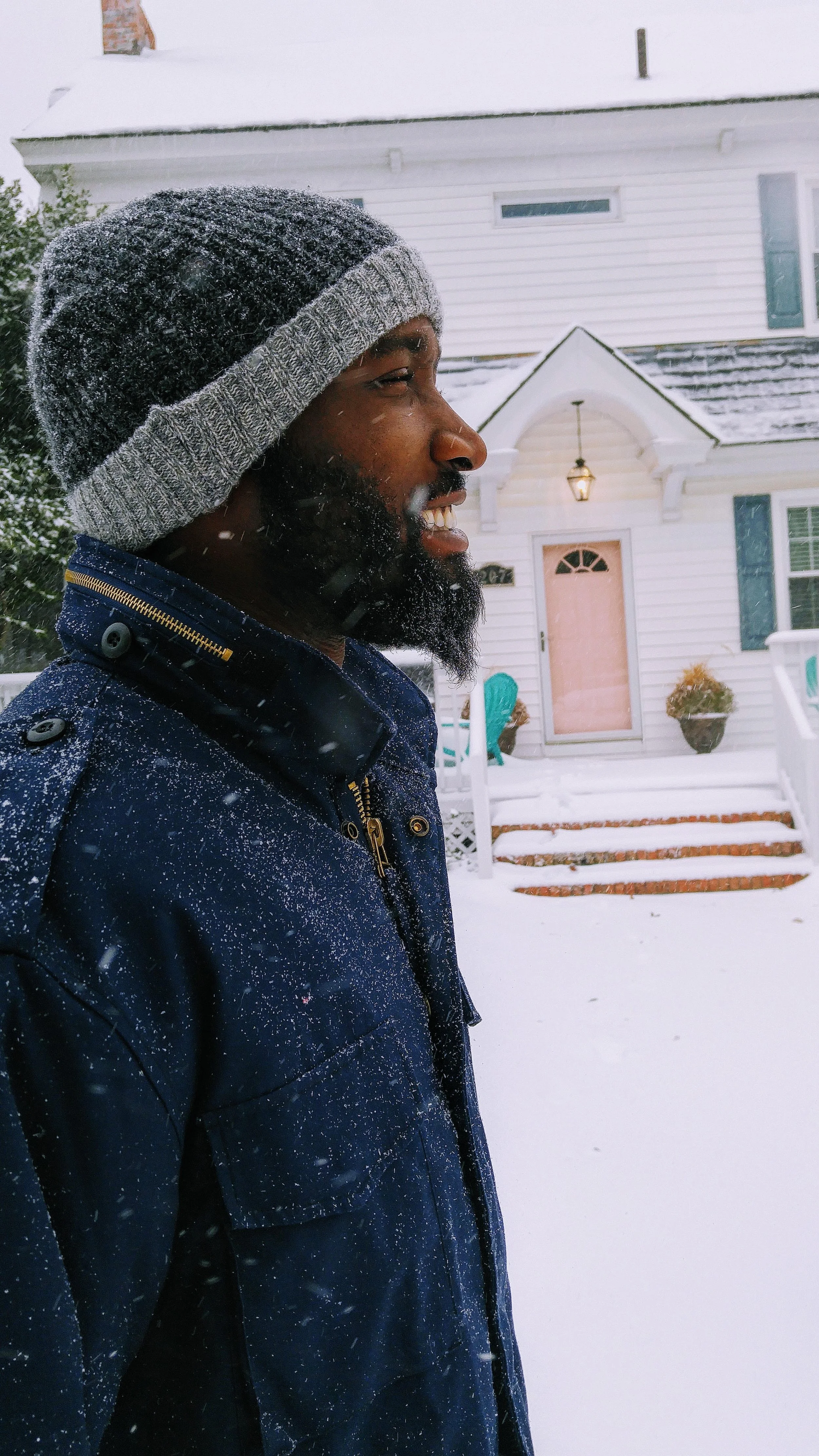
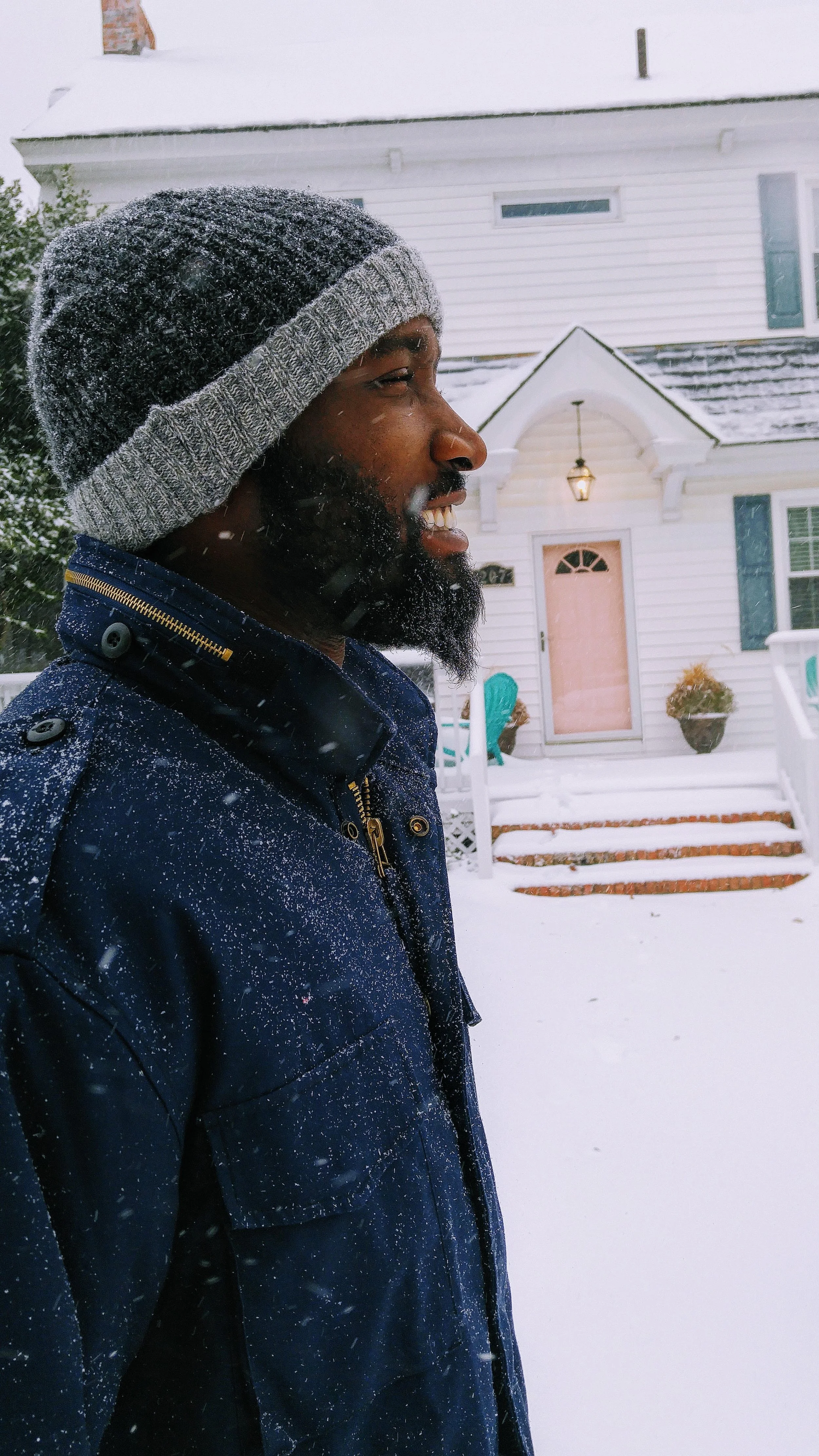
Jeremy in Virginia Beach during the 2017 blizzard